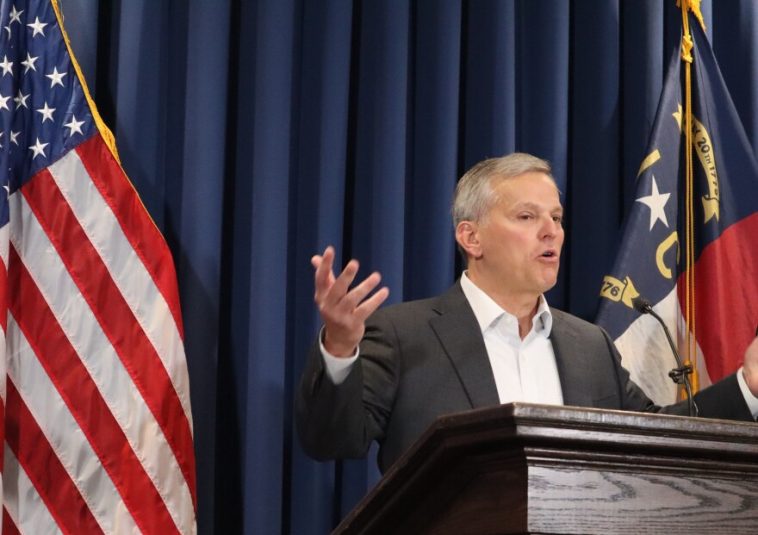

Governor Stein’s Controversial Choices: Balancing School Funding and Property Rights
The recent decisions by North Carolina Governor Josh Stein to veto a school choice tax credit initiative and to sign legislation on squatters have stirred up a debate in our state. These actions bring to the surface a host of tangled issues surrounding education, property rights, and the roles played by state and federal governments. This op-ed offers a closer look at the governor’s moves, exploring the tricky parts of school funding and property legislation and the subtle details that often get overlooked in political discourse.
The School Choice Tax Credit Debate: A Closer Look
In one of his more talked-about actions of the year, Gov. Stein vetoed House Bill 87—a proposed measure that would have allowed North Carolina residents to receive a dollar-for-dollar tax credit for donations toward school choice scholarships. The bill was intended to spur private contributions, providing families with the opportunity to choose educational alternatives for their children. However, by rejecting the bill, Stein signaled his intent to maintain a strong commitment to public education funding.
This development has left many feeling the weight of a decision that has both appealing and intimidating twists and turns. Proponents of school choice argue that tax credits promote parental freedom and inject much-needed resources into education. In contrast, Governor Stein and other supporters of public schooling express their concern about the federal government slashing funds for public schools while boosting tax benefits for those already investing in private education.
Understanding the Dollar-for-Dollar Tax Credit Mechanism
The proposed legislation would have provided a tax credit of up to $1,700 for donations made to nonprofits that award state-approved school choice scholarships. Here are some of the key points for anyone hoping to get around the fine points of the policy:
- Eligibility of Contributions: Donations had to be made to certified nonprofits that meet both state and federal criteria.
- Tax Credit Specifics: The tax credit was structured as a dollar-for-dollar reduction, which means for every dollar donated, the donor would receive a one-dollar reduction in their tax liability.
- State Participation: To avail of this program, North Carolina needed to formally opt into a federal effort launched under a sweeping tax and spending bill earlier this year.
Critics argue that until the federal government provides sound guidance on the tax credit, rushing into such a program might lead to complicated pieces of policy strain on state resources. Instead, Governor Stein has chosen to delay participation in favor of investing directly in public school support systems like after-school programs and tutoring.
Public Education Versus Private Subsidies: The Governor’s Stance
Governor Stein’s decision to forego the tax credit option exemplifies a long-standing debate between expanding opportunities for school choice and ensuring robust funding for public schools. His veto message made clear that his choice was driven by a desire to prevent further diversion of funds away from the public education system. Stein argued, “Once the federal government issues sound guidance, I intend to opt North Carolina in so we can invest in the public school students most in need of after school programs, tutoring, and other resources.”
This position underscores a critical, ongoing conflict in education policy. On one side are advocates who champion parental freedom and the benefits of school choice. On the other side are those who see public schools as a cornerstone of community enrichment and worry that tax credits may undermine the very financial support that public education desperately needs.
Key Considerations for Both Sides
It is important for stakeholders to recognize several factors when weighing the pros and cons of this bill:
- Equity in Education: Critics of school choice tax credit programs contend that such credits often benefit families that are already in a stronger financial position, thereby deepening inequities in education.
- Impact on Public School Funding: By diverting funds towards private education, there is concern that public schools—especially in underserved areas—may face further resource shortages.
- Administrative Complexity: Implementing the tax credit program involves numerous perplexing bits, from determining eligibility criteria to setting up streamlined processes for receiving tax credits.
This standoff over policy reflects the nerve-racking reality of trying to balance two urgent needs: giving families more educational choices while not sacrificing the quality and funding of public schools. It is a clear example of how the overlapping responsibilities of state and federal initiatives frequently lead to tangled debates.
Property Rights and Squatter Legislation: A Look into Senate Bill 55
In a seemingly unrelated, yet equally significant move, Gov. Stein signed Senate Bill 55—a law aimed at helping property owners remove squatters within clearly set timelines. This legislation comes as a response to a contentious debate over property rights and the measures available to residents facing illegal occupation of their property. The new law outlines specific procedures and hearing schedules that property owners must follow to reclaim their premises.
While the squatter bill might seem straightforward at first glance, its narrative is layered with subtle details that reflect years of negotiations and amendments. Initially, the language on removing squatters was bundled with provisions regarding pet shops, which raised concerns about inadvertently supporting unethical breeding practices, such as those found in puppy mills. After considerable pushback, the problematic elements were removed in favor of legislation that focused exclusively on safeguarding property rights.
The Evolution of Senate Bill 55
The refinement process for Senate Bill 55 demonstrates the challenging parts of shaping policy that is both effective and fair. Some highlights of this legislative journey include:
- Initial Drafts and Controversies: Originally, the bill combined provisions for dealing with squatters and regulating pet shops, stirring alarm among animal welfare advocates and property rights defenders alike.
- Legislative Revisions: When the bill reached the Senate, an additional clause barring local governments from regulating pet shops sparked further debate, forcing lawmakers to reconsider the bill’s scope.
- Final Agreement: The concerns were addressed by stripping out the contentious pet shop regulation and focusing the legislation solely on the mechanics of squatter removal to protect property owners.
This trimmed-down version of the bill demonstrates how legislative processes often require decision-makers to get into the nitty-gritty of a proposal, fine-tuning it to balance various interests. Governor Stein expressed his contentment with the revisions, noting that the final version concentrated on protecting property rights without supporting unrelated measures.
Understanding the Impact on North Carolina Communities
The decisions regarding both the school choice tax credit and the squatter legislation have significant ramifications for communities across North Carolina. In the educational arena, the potential for expanded school choice through tax credits raises important questions about the diversity of educational opportunities available to families from different economic backgrounds. Meanwhile, the squatter bill affects property owners who have long been challenged by the difficulty of removing unauthorized occupants, a nerve-racking problem many residents find themselves facing.
For many citizens, these legislative moves are both welcoming and concerning. On the one hand, there is an appreciation for the governor’s focus on bolstering public schools with essential programs. On the other, there is anxiety over the potential limits this could place on parental freedom and the financial autonomy of families seeking alternative education options.
Community Reactions and Concerns
Across the state, reactions to both policies have been mixed and full of small distinctions and passionate opinions. Here are some common viewpoints:
- Education Advocates:
- Support the governor’s emphasis on public school investment.
- Argue for more direct funding interventions in underserved communities.
- Express concern that tax credits might shift funds away from necessary school programs.
- School Choice Supporters:
- See the tax credit as a super important tool to empower parental choice.
- Feel that allowing families to choose the best educational setting is essential for fostering competition and innovation in education.
- Disappointed in the governor’s decision not to pursue the federal tax credit scheme fully.
- Property Owners:
- Welcome the squatter legislation as a necessary step to protect their investments.
- Relieved by the clear timelines and procedures now in place.
- Remain cautious about potential unintended consequences and the limits of due process according to property law.
These community reactions underscore how policy decisions can have wide-ranging effects that extend far beyond the immediate legislative arena. By examining the consequences of these bills, it becomes clear that both school governance and property rights are interwoven with the everyday lives of North Carolina residents.
Political Calculations and Legislative Tensions
The school choice tax credit and squatter legislation are not just policy decisions—they are also deeply political moves. Senate President Pro Tempore Phil Berger’s outspoken criticism of Governor Stein’s veto of House Bill 87 highlights a tension that has been building within the state legislature. Berger’s comments, framing the issue as a choice between supporting school choice or maintaining the status quo, underscore the political chess match unfolding behind the scenes.
Many state legislators are preparing to override the governor’s veto, a process that has already succeeded in a number of cases this year. The political clash is riddled with tension as it reveals fundamental differences about the roles of government at various levels and the best path forward for North Carolina’s educational and property policies.
Analyzing the Political Chessboard
When assessing the political maneuvering at play, there are several tricky aspects to consider:
- Legislative Overrides: The governor’s recent veto is his fifteenth this year, and while some have already managed to override others, this latest decision faces persistent challenges from key figures within the legislature.
- Party Politics: Partisan alignment is clearly visible, as Republicans in the legislature position themselves as ardent supporters of parental freedom through school choice, while Governor Stein and his allies continue to champion the public education system.
- Federal Versus State Roles: The involvement of federal guidelines in the school choice tax credit program adds another layer of complexity, as stakeholders must figure a path between state autonomy and federal oversight.
The unfolding drama surrounding these decisions truly demonstrates how policy is not made in a vacuum. Instead, it is the result of careful, and sometimes, nerve-racking political calculations where each actor must weigh the risks and benefits before taking a stand.
Weighing the Benefits: Public School Investments and Beyond
Governor Stein’s emphasis on investing directly in public school programs is a critical component of his administration’s educational strategy. By choosing to postpone the tax credit initiative, he aims to secure funding for programs that provide after-school tutoring, extended learning opportunities, and supplemental support for students in need. His message is clear: with proper federal guidance, North Carolina can better serve those who depend most on a robust public education system.
In this context, his decision serves as a reminder of the importance of targeted state investments, which many see as key to uplifting communities and preparing students for future challenges. The governor’s proposal stands in contrast to the idea that tax credit schemes automatically translate into better educational outcomes. Instead, his approach focuses on reinvesting resources directly into schools that are under strain due to budget cuts and shifting federal priorities.
Advantages of Direct Investment in Public Education
Several elements make the governor’s strategy appealing to certain stakeholders:
- Focused Resource Allocation: Direct investments in educational programs mean that funds are targeted at schools where there is undeniable need—especially in areas where after-school programs and tutoring services are scarce.
- Building Capacity: Funding aimed directly at public schools can help build capacity in communities, ensuring that all students have access to essential services without relying on the fluctuations of a tax credit scheme.
- Accountability: By channeling resources directly into public school programs, there is arguably greater accountability, as oversight structures exist within the school system to monitor spending and outcomes.
This approach, favored by many public education advocates, emphasizes the importance of looking beyond short-term solutions and investing in long-range strategies that promise steady improvement in educational quality and equity.
Squatter Legislation: Protecting Property Rights One Step at a Time
While the school choice debate attracts significant attention, the passage of Senate Bill 55 on squatter removal is equally consequential for property owners. This law is designed to protect private property rights, ensuring that property owners have a clear and organized process for dealing with unauthorized occupants. The legislation was originally marred by additional provisions unrelated to squatters, such as those affecting pet shop regulations. However, after a period of back-and-forth in the legislature, the focus shifted solely to the removal process.
This evolution of the bill reflects the challenges inherent in separating issues that, on the surface, seem connected by legislative procedure but in practice require a more focused solution. Instead of muddying the waters with unrelated policy objectives, the final version of the squatter bill zeroes in on protecting property owners—providing them with specific timelines and procedures to legally remove squatters.
Understanding the Mechanics of the Squatter Bill
The final version of Senate Bill 55 lays out the process for addressing squatters in clear terms. To get a handle on the fine details of this law, consider the following points:
- Defined Timelines: The law mandates strict timeframes for hearings related to squatter removal, giving property owners confidence that their cases will be addressed promptly.
- Protection of Property Rights: By streamlining the process, the legislation affirms the rights of property owners to reclaim their property, reducing the potential for drawn-out legal battles.
- Elimination of Controversial Provisions: The removal of unrelated measures, such as pet shop regulations, underscores a commitment to resolving only those issues that directly affect property rights.
This bill illustrates a methodical approach to a problem that has long plagued property owners, and by focusing on a straightforward procedure, lawmakers have worked to remove some of the nerve-racking uncertainty associated with squatter disputes.
The Ripple Effects on Local Governance and Community Trust
Both the education and the property rights decisions made recently have significant implications for how local governments operate and for the trust communities place in those institutions. When state leaders shape policy that directly impacts everyday life, residents are forced to either embrace the changes or confront additional hurdles. In North Carolina, these policies could influence not only school funding but also property management and local law enforcement practices.
Local government bodies now face the challenge of aligning their efforts with state directives while also addressing the concerns of residents. Whether it’s managing tax credits for school choice or applying new protocols for squatter removal, local officials have a nerve-racking task ahead as they try to make their way through the overlapping responsibilities set forth by state and federal laws.
Challenges and Opportunities for Local Administrators
Key issues for local governance include:
- Coordination with State Policies: Local officials must adjust their procedures to reflect the new state mandates, ensuring that their processes are aligned with broader legislative frameworks.
- Resource Allocation: With limited local budgets, municipalities have to carefully figure a path through additional responsibilities, especially when it comes to expanding support for public education or managing squatter cases.
- Building Community Trust: The effectiveness of these measures will ultimately depend on whether local agencies can deliver on promises of efficiency and accountability, thus maintaining the trust of residents.
For community members, the way local governments manage these changes manifests as either improved service delivery or, alternatively, increases in bureaucratic delays and confusion. It remains essential for community leaders and policymakers to keep communication lines open, taking a closer look at the fine shades of how each policy affects daily life.
Examining the Broader Implications for State Education Policy
Governor Stein’s recent actions also open up important conversations about the future of state education policy in North Carolina. His dual approach—rejecting a controversial measure on school choice while bolstering initiatives for public school investment—reveals an underlying philosophy: that direct reinvestment in traditional public education is a more reliable way to support student achievement in the long run.
This approach may prove crucial at a time when federal guidelines are in flux and states across the nation are grappling with budget constraints. As education policy continues to evolve, it is paramount for policymakers to stay focused on what works best for the majority of students rather than adopting quick fixes that may offer only temporary relief.
Long-Term Considerations for North Carolina’s Students
Looking ahead, several key factors must be considered:
- Sustainable Funding Models: Investment in public education should be designed to endure fluctuating federal funding streams. Building programs around stable, predictable state funding can help create a more reliable safety net for students.
- Ensuring Equitable Access: While the tax credit scheme aimed to promote school choice, ensuring that such options do not leave behind students in less affluent areas is critical. Policy must balance freedom of choice with the need for broad-based support for public education.
- Community Involvement: Local communities should be included in decision-making processes. Whether it is through town hall meetings or collaborative planning sessions, the insights from educators, parents, and local leaders are indispensable in shaping policies that truly benefit students.
These considerations emphasize the need for a multifaceted education policy—one that protects the interests of all students while also acknowledging the ever-changing landscape of federal and state contributions. It is a tricky balancing act, loaded with challenges but equally full of potential when managed with care and collaboration.
Striking a Balance: The Intersection of Policy and Practical Impact
The recent legislative decisions in North Carolina have provided an opportunity to examine the practical effects of high-stakes policy negotiations. On one side, the rejection of a potentially transformative tax credit measure for school choice signals a commitment to safeguarding public education from abrupt federal shifts. On the other, the squatter legislation speaks to a deep-seated need to protect individual property rights in an increasingly complicated legal landscape.
Steps taken by leaders like Governor Stein are a reminder that both education and property laws must be scrutinized through the lens of everyday impact. Whether one supports the notion of school choice or prioritizes the enhancement of public schools, the inherent goal remains the same: to provide a secure, well-funded environment for growth and learning, while also ensuring that property rights are respected and protected.
Strategies for Moving Forward
To help foster better outcomes in these areas, state and local officials might consider adopting the following strategies:
- Increased Communication: Establish clear channels between state legislators, educators, and community leaders so that all voices are heard.
- Enhanced Transparency: Make policy changes more accessible by breaking down the confusing bits of legislation into simple, understandable language for the public.
- Regular Policy Reviews: Set up committees to routinely evaluate the effectiveness of new laws—ensuring that lessons from both successes and setbacks are used to guide future decisions.
- Collaboration Across Departments: Encourage interdepartmental collaboration so that policies in education, housing, and property rights can be developed with a holistic perspective.
Such strategies can help state officials manage the multiple, often nerve-racking demands of modern governance. By engaging in collaborative decision-making that digs into the day-to-day realities of both educators and homeowners, North Carolina can aspire to lead by example.
Conclusion: Reflecting on the Policy Choices Ahead
The decisions to veto the school choice tax credit bill and to sign a streamlined squatter removal law are emblematic of the broader challenges facing North Carolina today. Governor Stein’s moves are neither wholly right nor wrong; they represent tactical choices amid a politically charged environment that is as intricate as it is full of problems. On one hand, there is hope that direct investment in public schools can uplift communities and provide necessary academic support. On the other, protecting property owners from the burdens of unauthorized occupancy is a sensible response to long-standing grievances.
These policy decisions set the stage for tougher questions in the future: How can the state ensure both equitable educational opportunity and secure property rights in a rapidly changing fiscal and regulatory landscape? How will local governments align with these policies while addressing the everyday concerns of their constituents? And, most importantly, how can political leaders move beyond the nerve-wracking tensions of partisan conflict to build consensus on issues that affect every North Carolinian?
As we move forward, it is essential to keep an eye on the practical effects of these policies. Stakeholders—ranging from educators and legislators to property owners and concerned citizens—must continue to take a closer look at the small distinctions and hidden complexities of each initiative. Whether you favor school choice or advocate for a robust public education system, whether you are a property owner or a tenant, these legislative shifts remind us that policy is a living, ever-evolving conversation.
In the end, the real question is not merely which path to choose, but how we, as a community, can work together to ensure that our decisions lead to sustainable, fair, and practical outcomes. With both the education system and property rights at stake, the path North Carolina takes in the coming months and years will determine not only the quality of our schools but also the strength of our communities.
As we digest these recent developments, let us remember that effective policy is built on open dialogue, mutual understanding, and a commitment to addressing the intricate and sometimes intimidating twists and turns of governance. Only by getting into the fine points of the issues at hand can we aspire to build a future that truly serves all residents of our diverse and dynamic state.
Ultimately, the choices made in the halls of the General Assembly and the governor’s office will continue to be scrutinized and debated. It is up to us—citizens, educators, property owners, and lawmakers alike—to ensure that this dialogue remains constructive and forward-looking. By actively engaging in these conversations, we can help shape policies that not only address today’s challenges but also lay the groundwork for a more inclusive and well-supported tomorrow.
In conclusion, while the road ahead is undoubtedly filled with tricky parts and a series of nerve-wracking decisions, it is precisely through these deliberative processes that the best policies are born. North Carolina’s recent legislative actions serve as a reminder that progress requires both a deep commitment to our shared values and the courage to confront the tangled issues of our times head-on.
Let this be a call to action for all of us to remain vigilant, informed, and engaged in the debates that shape our community’s future. Whether you are involved in the education system, a homeowner affected by property legislation, or simply a concerned citizen, remember that your voice matters in directing the course of our state’s policy. By staying informed and involved, each of us can help steer through the complex pieces of governance toward a brighter, more equitable future.
Originally Post From https://www.wunc.org/politics/2025-08-07/gov-stein-vetoes-school-choice-tax-credit-effort-signs-squatter-legislation
Read more about this topic at
Federal Balancing Act: An Interactive Budget Simulation …
Balancing Act – Congressional Progressive Caucus